State of the industry (2026 edition)
LLMs and you, a love story
This isn’t a short read, but I promise, not a single word of this was written by AI.
I apologize for such a long letter - I didn’t have time to write a short one. (Blaise Pascal)
Background
I’ve been doing software engineering for a living for over 20 years now, and probably well over 25 as a self-taught tinkerer. Soon after I finished studying, my mentor (hi S.M.!❤️) became my coworker, and “accidentally” imparted on me something more valuable than any and all the actual technical mentoring. A single sentence:
People and their knowledge are the most important resource for an IT company.
It seems so obvious, and almost trivial to note, but at the time of writing this in 2026, things are changing in software engineering, and a lot of people seem to have forgotten this simple fact.

In spite of the well-documented empirical truth that there is no silver bullet for engineering complexity, various people have kept inventing a new silver bullet every few years. This is mostly a consequence of Silicon Valley hype machine, and the investors who buy into it.
Two recent silver bullets that have come out of this are “The Blockchain”, and now - “AI”.
So after more than 20 years of dealing with silver bullets, here are some thoughts.
Technology, Terms, Conditions
First, to get something out of the way, let’s briefly talk about the term “AI”.
Put bluntly, AI is a marketing term. There is no actual cognition happening in the entire field. Although some of the folks at Silicon Valley believe that there is, or they want everyone else to think there is, we actually have a formal, scientific proof that “AI” does not lead to AGI. What is happening, however, is that AIs (LLMs) have encroached into the area of cognitive science - but not in a good way, as detailed in the linked research paper. In terms of reproducing human cognition, what has been dubbed as “AI” is a dead end. It tries to reduce human cognition into a computational problem, which it isn’t. Current “AIs” are pattern-matching, not reasoning.
Much like blockchain, the technology behind AI is exciting. It all rests on the transformer architecture, and is a very interesting piece of tech to understand, with a future that is as bright as it is unclear. AI models are a very useful tool in many areas of human activity. But much like the blockchain hype, there are people with monetary incentive in overhyping things.
And today, it is more important than ever to distinguish the tech - which I do think is genuinely useful - and the absolutely insane levels of greed and recklessness surrounding it.
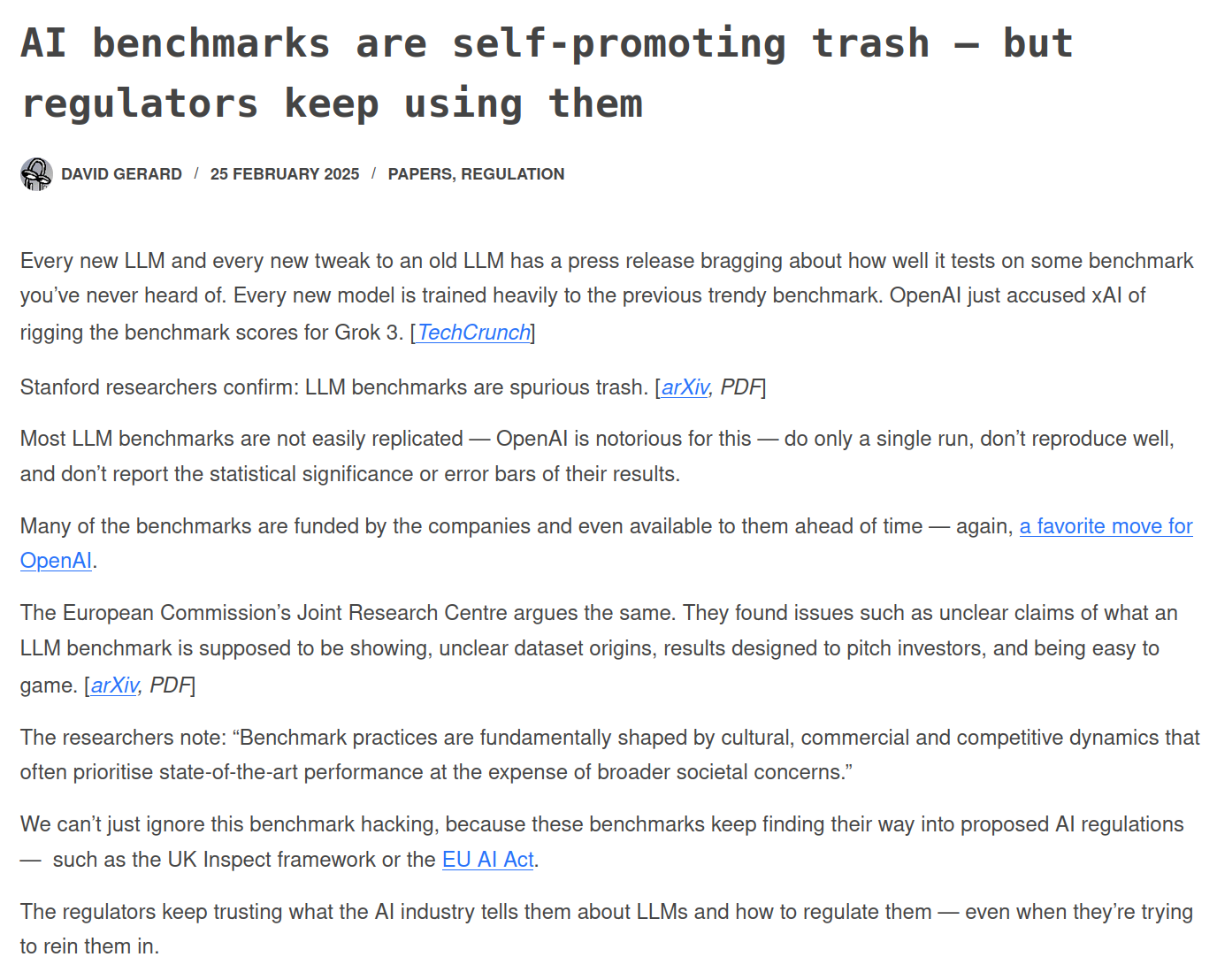
When blockchain was trending, we went through three distinct stages of development:
- Hype among engineers: new tech that is the best thing since sliced bread, it will be a revolution of everything.
- Hype among laymen: clients asking you “are you using blockchain” or “can we use blockchain anywhere”, without any rhyme or reason, just because they heard of it as something new and shiny.
- Normalcy: blockchain returning to its “normal” place in the world, where it actually has some useful applications. This meant that laypeople pretty much stopped caring about it, and engineers started using it only where it made sense.
We are now obviously at the second stage of AI hype, and we’re waiting for the bubble to burst. When this will happen is anyone’s guess. But in the meantime, keep in mind that “AI” in this text should always have quotation marks around it, because there is no thinking happening when AI is “thinking”. We are, ultimately, still talking about stochastic parrots.
Also worth noting is the fact that AI usage has a horrible environmental, economic, privacy, security, cognitive, societal, scientific, and even humanitarian impact beyond the engineering-related issues discussed in this text, but let us ignore that for now (the proof that all of these topics could be separate posts is the fact that even the pope got involved, which I find interesting and somewhat entertaining as a humanist atheist).
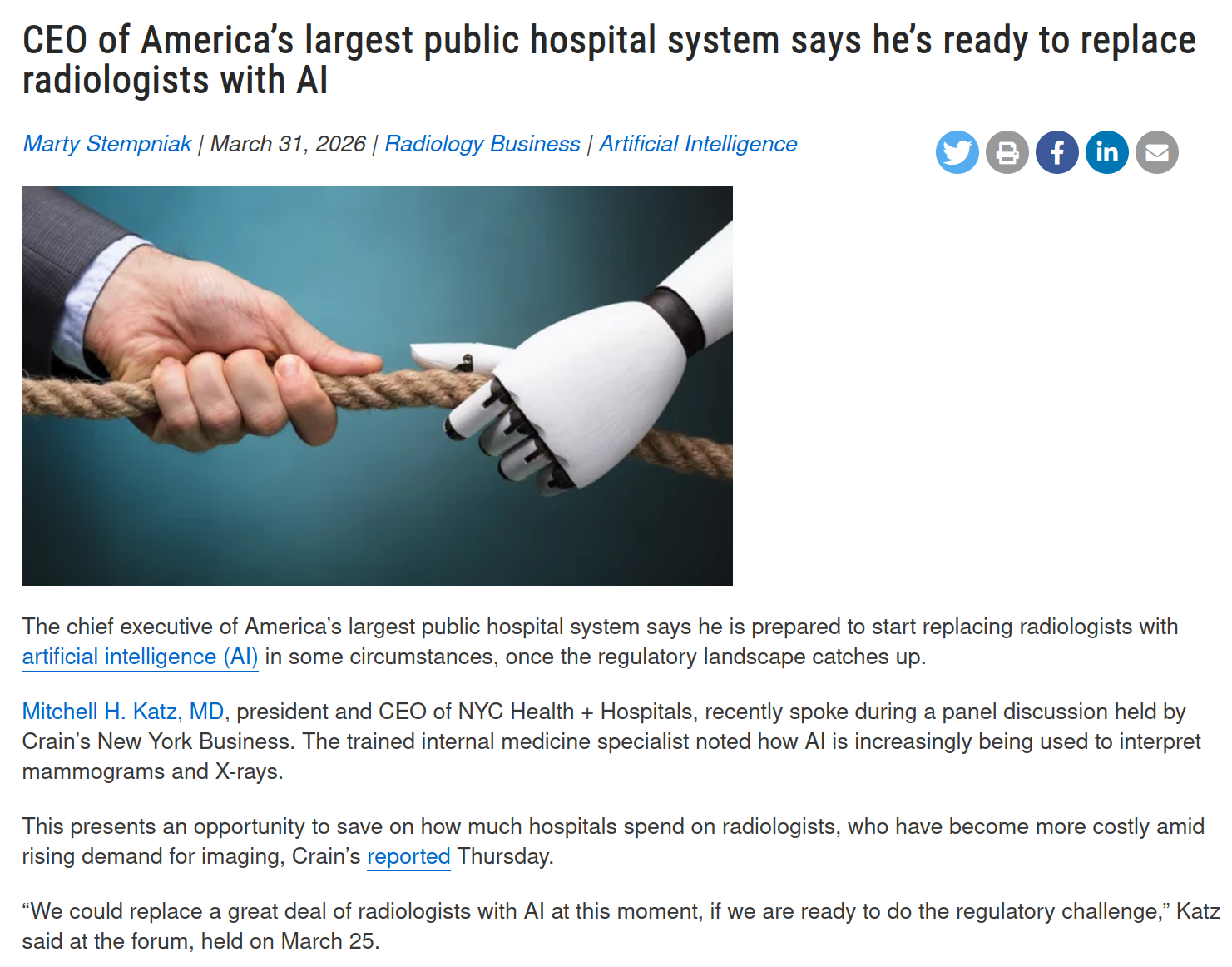 Why learn from the Therac-25 incident,
when you can try to reproduce it?
AI Limitations
The future of AI is fairly clear in one aspect: no, you will probably never be able to type “give me an application that does X”, and have the end result be good. As Dijkstra wrote in his essay On the foolishness of “natural language programming”:
When all is said and told, the “naturalness” with which we use our native tongues boils down to the ease with which we can use them for making statements the nonsense of which is not obvious.
Sure, you’ll get something out of it, and it will look like it’s good, but it won’t actually be good. Two reasons for this:
- By the very nature of LLMs, they are non-deterministic. That characteristic is embedded in the algorithm, and there is no workaround - as soon as you try to make them deterministic, LLMs become useless. This means that they can never produce reliable output that doesn’t need human oversight.
Human/natural languages are ambiguous. Always have been, always will be. So even if you had a magic wand, and made the first point disappear somehow, you would still have an issue of garbage in, garbage out. But this time, it’s even more garbage, because we’re no longer even talking just about input into an algorithm, we’re talking about garbage being used to create the algorithm itself.
To really hammer this point down, here’s a different perspective: our brains have evolved for millions of years, and these brains have invented the languages we’re using. There is literally no better natural language processor than a human brain. And yet, when you read a sentence like »Visiting relatives can be annoying«, you have no idea whether the act of visiting one’s relatives is annoying, or whether the relatives who are visiting can be annoying.
So, by definition, you can never ever get deterministic output from an AI.
The second, and the more interesting part of Dijkstra’s quote (the nonsense of which is not obvious) will be addressed later.
AI Ouroboros
To further stress the “garbage in, garbage out” problem, remember that the primary reason AI models are performing well is the fact that AI companies have shamelessly stolen and privatised the entirety of human knowledge and art. They pirated terabytes of data, from sites that literally serve the world as repositories of knowledge (Anna’s Archive, Z-Lib, LibGen, Sci-Hub). All the while, those repositories of knowledge have to deal with the full weight of the legal system supported by those same companies.
In other words, it’s only piracy if you and I do it, it’s a cost of doing business for big companies.
 Then those same companies are complaining
when other AI companies rip them off
But this will have to stop working at some point. As more and more AI output is released into the world, AI models will have to start consuming it. The chances of this process not eroding the quality of models are slim to none. Whether we have already reached the peak while you’re reading this is anyone’s guess, but it certainly looks like it’s inevitable.
AI and Engineering
Keep these two facts in mind:
First, and it might be harsh to hear this, but let’s be honest for a moment: any idiot can write code. I know, because I was, and probably still am that idiot, and I’ve witnessed plenty of idiots do it. Writing code isn’t hard. Writing good code is hard, and maintaining it is even harder.
Second, when you’re implementing some feature, in a large majority of cases, the feature itself is easy. It’s what comes with it as “baggage” that’s difficult. For example, writing a chat application is easy. Writing a chat application that offers excellent security, safe end-to-end encryption, good scalability, data consistency, low latency (and so on) is the hard part. And same as before, maintaining all of that is even harder.
Code Reviews
Let’s briefly talk about the hidden cost of unavoidable code reviews.
You can use AI to generate 20.000 lines of code, but how do you know that those 20.000 lines actually do what you want without checking? More importantly, how does the rest of your team know this without checking?
How many people can you name in your immediate vicinity that actually do good code reviews, instead of just LGTM-ing it? How well do you think things will go when you increase the churn of massive AI-generated merge requests?
And how does AI help solve these problems?
Well, it doesn’t. In fact, it seems to make it worse.
(At this point, I will skip talking about reviewing SDDs and RFCs written with the assistance of AI, because those that I have personally encountered were a steaming pile of hot garbage, not worthy of attention.)
LoC & Other Metrics
Here’s a sentence you probably never expected to read in Anno Domini ≥2026 - yes, the CEOs are once again counting Lines of Code and Number of MRs Merged as relevant metrics. Even though the lines of code written were never the bottleneck. Hell, they’ve gone one step further towards absolute insanity, and started counting the number of tokens spent as a relevant metric of literally anything.
“When a measure becomes a target, it ceases to be a good measure.” - Goodhart’s law
This is akin to measuring the performance of a teacher by looking at how many sentences they’ve uttered in a classroom. Sure, anyone can “teach” 500 lessons in one day, but this might just be a situation where there are questions that are more pertinent - is our children learning?
Alternatively: measuring the quality of a novel by counting the number of words used to write it.
I guess on some level it is actually impressive to see a revival of the most ridiculous aspects of bad management practices, even though these were addressed in some books that are over 50 years old, and dismissed as irrelevant and misleading. In a way, it is quite similar to the modern anti-intellectualism (Silicon Valley or otherwise), and the return of the flat earth conspiracy theory: we’ve solved this, we know it’s wrong, yet some people still believe it.
More formally, when it comes to metrics, we’re dealing with a serious case of McNamara fallacy.
AI as Force Multiplier
So now that we have a new generation of “leaders” that have resurrected this nonsense, it’s time to address the claim of AI being a force multiplier.
Here’s a twist - I agree that it is a force multiplier. Just not in a way that people think it is.
So the naive interpretation of this claim is - if you’re a Really Good Engineer™, AI is going to make you more productive than ever. And if you’re a bad one, it’s going to make you extremely bad. This is partially true, but is missing the mark.
We already have substantial evidence that AI is changing our vocabulary, and not in a good way. It appears like it will reduce it, essentially giving us the average vocabulary present in its training data. Think about this for a second: if your vocabulary sucks, AI is going to give you a slight boost, and make you seem more eloquent. However, if you have a rich vocabulary, it’s going to degrade it.
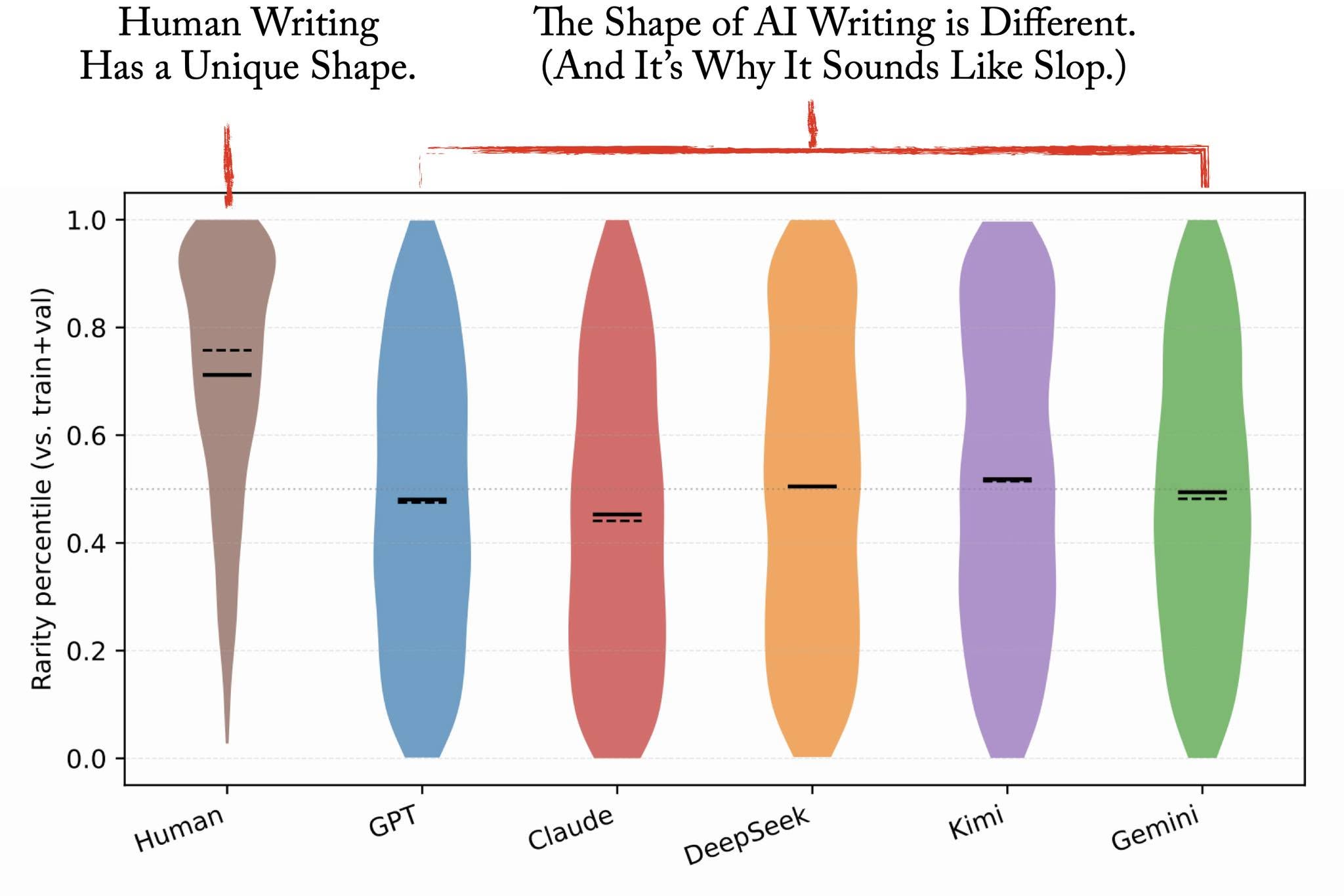 StoryScope: Investigating idiosyncrasies in AI fiction
DOI: https://doi.org/10.48550/arXiv.2604.03136
Now translate this to coding: if you’re an engineer who has no bloody idea what’s going on, using AI is going to give you a boost and make you seem more competent. (I think we’re already seeing some effects of this.) But if you’re really good, you’re going to miss out on making good code - you’ll produce something that tends towards the average, i.e. slop.
Because LLMs will generate code that respects some common rules, it will be formatted nicely, and will be peppered with comments, giving you the appearance of good, clean code. But the AI author of that code doesn’t grok the system, nor the problem you’re trying to solve. And a lot of the comments are restating the obvious…
 I bet you can’t guess what this piece of code does
Every decent software engineer has had one of those eureka! moments of inspiration, when you’ve gone really deep into the problem at hand, and realised that there is a much simpler solution than anything you’ve written or even thought of so far. Well, you can pretty much forget about it; you won’t be getting deep into anything, as a force of habit, you’ll go through a few iterations with your AI, create something acceptable that does the job, and be done with it.
There will be no personal growth, and there will be no sense of accomplishment.
AI as Amnesia Inducer
Given enough time, it will make us all dumber for using it. This might seem like an overly dramatic statement, or even a falsehood, but there is some evidence that this is already happening.
It is known that our brains will avoid remembering things if they can. For example, if you’re “older”, then you probably remember the era of phone landlines. You’ll also remember the fact that we had the most important phone numbers memorised in our squishy, fat-operated brains. Once our phones started remembering them, we stopped. We then started remembering where the actual information is stored.
Instead of storing the data, our brains just store a pointer to it.
This isn’t a bad thing on its own - there is no rational reason to memorise phone numbers - but it can be really bad if you’re a maintainer of a large and/or complex project, but you don’t really know it very well. Remember that AI will only get you so far, and without having intimate knowledge of your codebase, it will get increasingly difficult to spot issues and fix bugs.
And by using AI, your brain will always take the easy way. In other words, you’ll spend more time in System 1 thinking.
Uncanny Valley
Before 2025, I would occasionally be tasked with reviewing an MR that feels wrong for some reason, but I would be unable to pinpoint why. This would happen maybe once or twice a year. But during 2025, this started to happen much more frequently.
It is tricky to handle, because it is Good Enough™. It often even works. During my career, I’ve seen (and written) some fairly shitty code, but one thing I hadn’t seen until last year was shitty code that’s really really good at masquerading as good code. At least, not on this level.
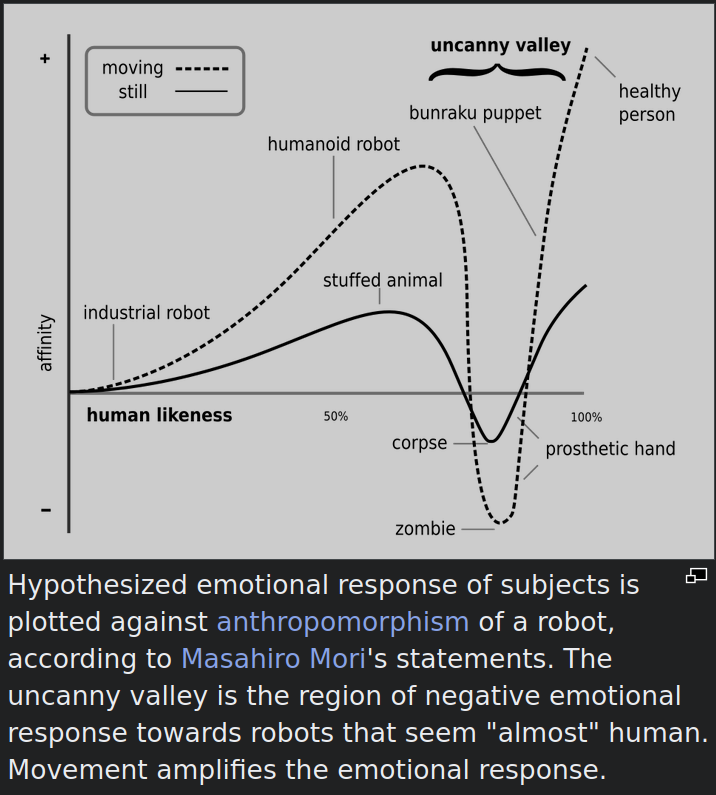 Source: Wikipedia
So I’ve dubbed AI-generated code “Uncanny Valley Code”. It looks like it’s supposed to be good, almost human, but only until you stare at it long enough to notice the naming inconsistencies, the redundant comments, the misleading interpretation of your prompts. It is, in many ways, the text version of AI-generated image slop. Sure, it looks like a 16th century painting, but the subject has an extra finger, and a phantom hand on her shoulder.
And it is frequently just so absurdly verbose. Suddenly, the “productivity boost” is one person generating 20.000 lines of code, and three other people reading it, and wasting time on verbose nonsense. It is precisely for this reason that the maintainers of Zig have outright banned any and all AI contributions (side note: this is a great interview to listen to, regardless of your stance on AI). There are probably many more such projects, just less prominent.
Long Term Perspective
Predicting the future is a fool’s errand, so I won’t be doing that. But here’s what the future looks like from now.
ONE
Even the best teams in the world, maintaining the best projects in the world - eventually create tech debt. Tech debt is pretty much the 2nd law of thermodynamics of software. It is inevitable, it will happen, and no, you cannot cheat your way around it. It’s just a matter of how quickly it will happen, and how much of it will appear. Better teams just resist for a while longer.
With AI, this process is sped up significantly. As AI is used to generate thousands of lines of code, more and more things will slip through the humans in the loop, things that would otherwise be stopped. Even with superb humans in the loop. It is subtle at first, and people will praise AI for the “increase in productivity”. But as we concluded earlier, number of lines of code written does not equal productivity, especially after the early stages of development.
What you will have created is a massive pile of tech debt nobody can understand. Not you, and not your AI. Why not AI? Well…
TWO
AI peddlers have already started raising prices. They are haemorrhaging money by the buckets, and unless a significant leap in technology behind the models happens overnight, they will almost certainly not be profitable in the foreseeable future. The game plan, as far as I can see at least, is to grab the market and make everyone get used to your product. Not just get used to, but actually become addicted to it.
And then hike the price.
 Please take a moment to appreciate the fact that Satya Nadella apparently doesn’t know how mirrors work.
This is where all the stuff previously mentioned regarding the loss of cognition comes into play - your brain doesn’t like System 2. It requires energy, time, focus, delayed gratification. All the things that the big (anti-)social network platforms are already gnawing at.
With time, people will either realise that humans are a better investment, or start paying the rent to AI companies.
THREE
In terms of wider societal consequences, it is very unclear what the future of our industry looks like when it comes to upskilling juniors to seniors. Giving juniors AI is akin to giving a wheelchair to a baby still learning to walk.

For people who have done some serious engineering before the rise of AI, AI can be a useful tool. But it can be a useful tool precisely because we’ve gone through the stages of internalising what good code looks like, what bad code looks like, where the most common mistakes are, how to work with legacy code, etc. This is what “the human in the loop” needs to know to use AI effectively.
Remember the Dijkstra quote above, ending with “statements the nonsense of which is not obvious”? This is where we come back to it.
How exactly is someone currently graduating from college supposed to learn any of the necessary skills for good AI use, when AI is right there, ready to be used? They have no means of discerning a good function decorator versus a bad one. No means of distinguishing between a good and a bad level of abstraction. No way of even knowing whether they are any good at this.
That is…unless they resist the (over)use of AI.
Will they be hired if they do so? By smart companies? Or anyone at all?
Will they be mentored? And what will that mentoring look like if the code is produced by a stochastic parrot?
Will any of the mentoring even stick and be internalised if you’re not the author of the code, but reduced to a mere agent orchestrator, tasked with rubber-stamping code changes and taking the fall when they don’t work?
Will you let go of the tangible mass of your mind, because it is only an illusion?
AI and your rights
Up until the meteoric rise of AI, software engineers were a fairly protected class of people. Our salaries were “high” compared to most other industries.
Side note: high is in quotation marks because they were actually just appropriate given the work done and financial gains gained by the select few, but everyone else is so severely underpaid across the board that engineer salaries appear high.
Good software engineering is really hard, and smart companies know this. This is the main reason why we get those relatively high salaries, travel expenses, lunch benefits, good health insurance policies, etc. Because companies knew that a good software engineer is going to earn them way, way more money than the salary and all the benefits they have to pay. Sprinkle some merch and a half-decent company culture on top of it, and you have a happy engineer earning you a pile of cash.
Enter AI.
Suddenly, the [charitably named] less-smart companies think that AI can replace human labour. But as we’ve seen above, that’s not quite true. Yes, you can get more out of good engineers, and you can get something out of the bad ones, but ultimately it’s the human factor that matters.
So what do the mass layoffs tell us, socially speaking?
Well, put simply, we’ve been had. What the current situation revealed is the bare truth felt by the less privileged workers around the globe - the companies treated engineers well because they had to. Now we’re “finally” being treated like the rest of the workers. The overwhelming sentiment of Silicon Valley CEOs is “you’ll work on our terms, or you won’t work at all”. More bluntly, “you need pain”.
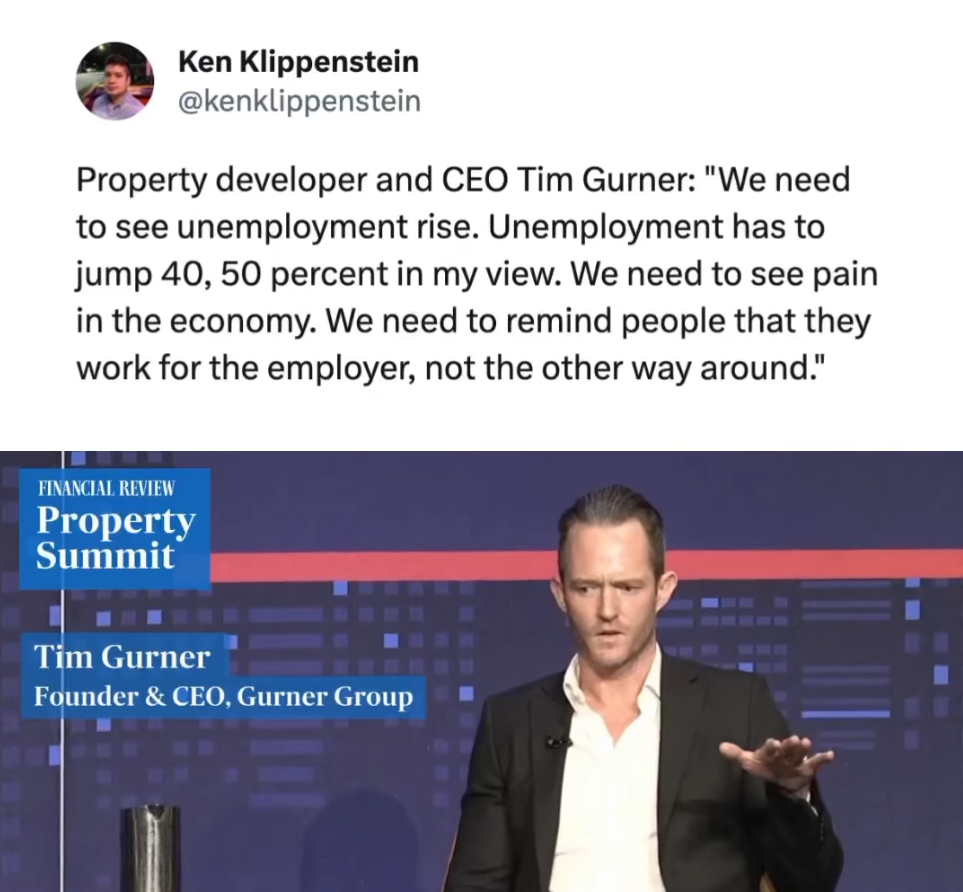 What a perfectly normal thing to say.
It is essentially the process of enshittification, but for humans instead of platforms.
In other words, if you’re in a decently sized company, it might be a good idea to start thinking about unionising, swedish style. After all, you have nothing to lose but your blockchains. 😉
As final food for thought, if we’re going to describe AI as a stochastic parrot that is occasionally correct and only sometimes useful, and therefore needs constant human supervision in order to stop it from hallucinating…why are we not talking more about AI replacing all the politicians and cocaine-fuelled Silicon Valley CEOs who are making everyone’s lives miserable?
¯\_(ツ)_/¯
Post Scriptum
Here are some more interesting links dealing with a lot of the topics mentioned in this text:
- Addy Osmani: The 80% Problem in Agentic Coding
- BBC: AI is now unpopular. That may not make a difference.
- WSJ: Tech Has Never Caused a Job Apocalypse. Don’t Bet on It Now.
- Modern Prometheus: tracing the ill-defined path to AGI
- Lee Hutchinson: So yeah, I vibe-coded a log colorizer—and I feel good about it
- Axel Molist: What 6 months of AI coding did to my dev team
(the video isn’t that interesting, but the comments are entertaining) - ‘I wish I could push ChatGPT off a cliff’: professors scramble to save critical thinking in an age of AI
- Bosses Are Becoming Obsessed With AI, Using It to Make Every Decision, …
- The Infographics Show: AI Replacing Developers Has Officially Failed
- AI Incident Database